
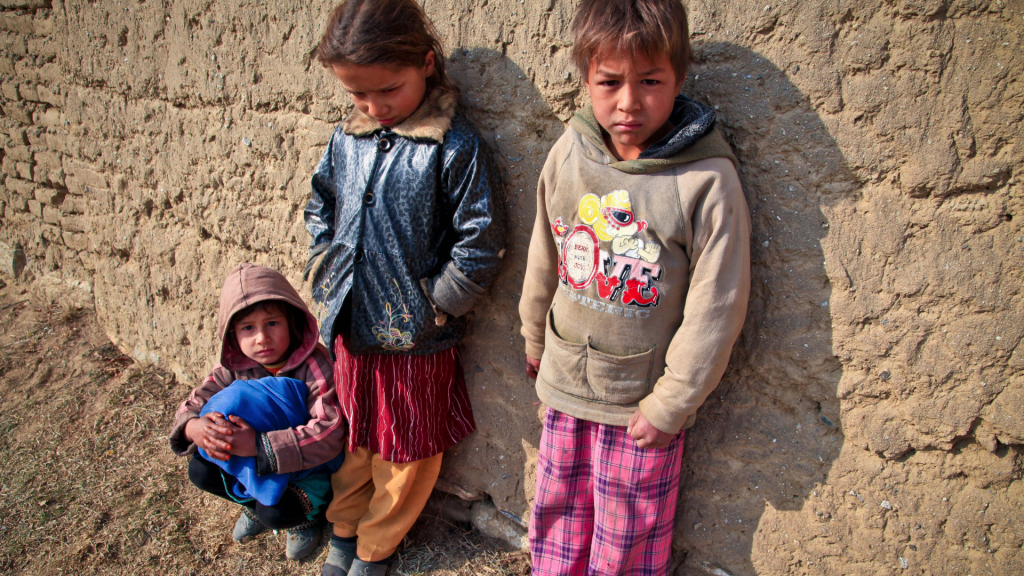
Today, with a population of ~7.5 billion there remains over 820 million people who are chronically hungry.
Conflict is a topic that I have briefly mentioned in previous posts, often called out as one of the largest contributors to global hunger but never a topic I have dared to tackle in any sort of detail. This is most likely as I have liked to take a positive outlook, focusing on how recent technological innovation is being or could be leveraged to tackle other major contributors to global hunger levels such as climate change, food waste and farming efficiency. The reality of conflict’s impact on food security, however, means that the only true solution to addressing hunger in conflict areas is peace – the great answer to achieving this for any conflict being a whole additional question of significant complexity. This question I will not be looking to answer, but will be exploring in further detail here the close relationship between hunger and conflict.
Conflict on the rise
The link between hunger and conflict is undeniable and has been a key driver behind the increasing number of malnourished people globally in recent years (including years prior to the COVID-19 pandemic). Both the occurrence and impacts of conflicts are increasing, with 60% of undernourished individuals and 79% of the 155 million stunted children living in countries affected by violent conflict.
Since 2010 the number of conflicts globally has been on the rise [figure 1], accounting for both state-based conflicts (concentrated in Syria, Iraq, Yemen and Afghanistan in the Middle East, and Burkina Faso, DRC and Somalia in Africa) and non-state conflicts. The former is now at an all time high since WWII and whilst the latter is plateauing, it is doing so at a level significantly higher than prior to 2010.

These conflicts both deprive many of access to food (all too often an intentional strategy) as well as destroying infrastructure and the capability to handle food shortages, particularly for the poorest and most vulnerable who can not afford to migrate to safer areas. The detrimental impact on food security and hunger levels that conflict has is well demonstrated by the significant overlap in figures 2 and 3, the first highlighting conflict regions in 2020 and the second highlighting priority countries for additional intervention to achieve hunger levels of <5% by 2030, based on International Food Policy Research Institute (IFPRI) models.


Yemen, a case in point
A prime example of how conflict impacts food access and security is Yemen, ranked 112th out of 113 for food security, as well as second last for food availability, on the global food security index.
There are various different impacts resulting from the conflict which ultimately result in this outcome and what is often described as one of the worst humanitarian crises in decades. Destroyed infrastructure limits access to food and healthcare, whilst job losses, falling incomes and high inflation push more and more people into poverty and raise further barriers to food accessibility.
Out of a population of 30 million, the UN estimates roughly 250,000 people have died, over half of these through indirect consequences such as lack of food and healthcare, during the six years of war that Yemen has seen. 4 million people have been displaced and, despite ongoing humanitarian support from governments and charities, over 50% of the population are food insecure.
This level of food insecurity is despite many billions in aid provided over the course of the war, aid that has been key in preventing these figures from deteriorating even further. Despite restrictions and challenges in accessing many of those worst impacted by the war, aid programmes have been providing vital supplies such as shelter, water, food and health services for families driven from their homes or living in villages and cities ravaged by the war, as well as providing monetary support through cash transfers.
“Only peace can break the corrosive cycle of hunger and conflict”
In cases like Yemen, as well as other conflict hit regions, provision of aid is the immediate short term option to try to limit and then hopefully improve the levels of malnutrition. The theory then outlines that, to ultimately address hunger levels in the medium to long term, communities (those less directly exposed to the conflict) need to be rebuilt through stimulating local economies via public work programmes for essential infrastructure and the restoration of food production. This then followed by increasing local food resilience through provision and adoption of modern agricultural tech, enabled through supportive policies.
However, the reality in the more severe cases, where conflict is ongoing, is that opportunities to rebuild and strengthen resilience are slim to none and the only real solution to tackle the hunger problem is an end to the conflict. This is best put by the World Food Programme’s (WFP’s) statement to governments when requesting aid:
WFP is keen to stress to donor governments that Yemen needs peace — only peace can break the corrosive cycle of hunger and conflict that has stalked the country for six years.
Sources:
http://www.fao.org/3/CA1587EN/ca1587en.pdf
https://www.sciencedirect.com/science/article/pii/S0016718518300666
https://www.wfp.org/stories/yemen-global-development-famine-un-conference-hunger-food-aid
https://www.wfp.org/countries/yemen
https://reliefweb.int/report/world/conflict-trends-global-overview-1946-2019
https://sipri.org/yearbook/2021/02
https://www.ifpri.org/publication/ending-hunger-what-would-it-cost
https://impact.economist.com/sustainability/project/food-security-index/index

 Do More. Technology Re-imagined.
Leave a comment