
A Worrying Trend
Coronavirus has had devastating impacts around the world, particularly for those who were already vulnerable, including at home here in the UK. As well as the rising number of deaths, hundreds of thousands of people are being driven into financial hardship. Whilst government measures like the furlough scheme and temporary increases to universal credit have helped, the impact of the virus induced lockdowns has cut incomes for so many.
Figures from the Trussell Trust, a charity with a network of foodbanks in the UK, saw an 89% increase in the number of emergency food parcels in April, compared to the previous year, including a huge increase of 107% for parcels for children. Around half of these people had never needed a food bank before.
The charity warns that with mass unemployment predicted on a scale not seen since the early nineties, there will be further rises in poverty with 670,000 additional people classed as destitute by the end of 2020, meaning they cannot afford essentials like housing, energy and food.
The recent government extension of the furlough scheme and the u-turn on £400mn spending (including £16mn to food banks) for free meals & support for poor children and their families over the holiday is definitely welcome and should go a long way to minimise the number of families going hungry, at least for now (although it shouldn’t take Marcus Rashford to have to force a government u-turn on prioritising spending for free meals for the children most in need over Christmas!). However, despite this, the number of people in financial hardship continues to grow and the reliance on food banks in this country is greater than ever.
Support for those who need it most
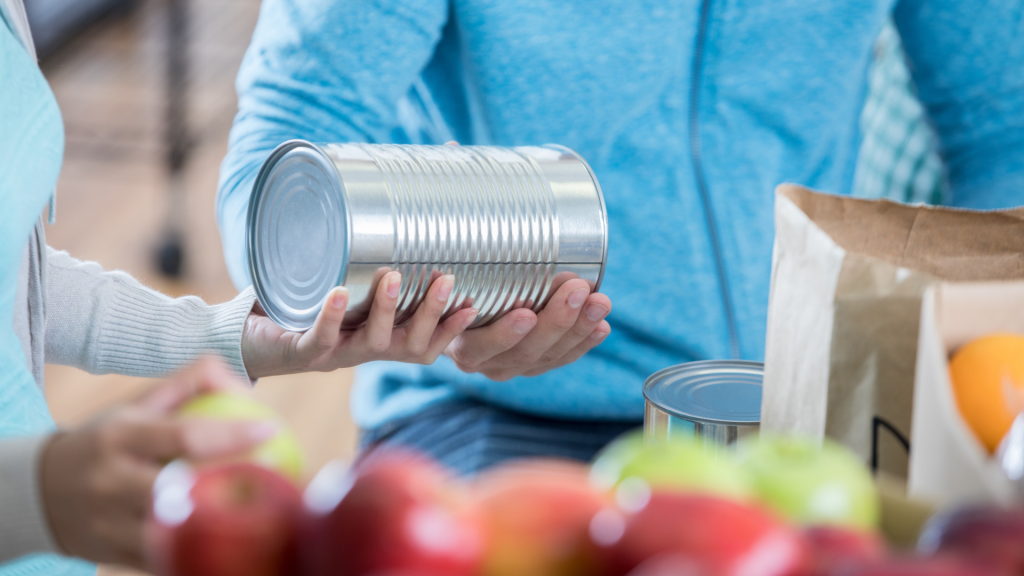
Having been volunteering at my local food bank, Bow Foodbank, for the last few months makes all these statistics very real and has highlighted the significant need for and impact of food banks. The food bank has had to relocate to a larger venue and there is a huge group of volunteers needed who help unload deliveries, pack food bags, distribute food and provide support to all those who come to the food bank – with food coming from a combination of individual donations, wholesale and bulk purchases and donations from larger groups including some supermarkets.
Having spent hours each week unloading huge food deliveries (the reality is that the supply of individual food donations does not meet demand and the majority of food has to be bought in at cost) it is always shocking coming back the following week and seeing how empty the shelves all are and the sheer amount of food distribution that is needed within the local community. The food bank now supports 800 adults and 1500 children per week at a cost approaching £16,000 – close to 10 times the amount needed prior to COVID!
Bow Foodbank is an independent food bank, started in 2014 whose main goal is to act as immediate support to those undergoing a sudden change of circumstance, or to provide intermediary support to those on the waiting list for more long term assistance. Under normal circumstances, the service runs just like a shop. People are told how many items they are allowed to choose (10+3 per child) and are then welcomed to select from the wide range available with the assistance of a volunteer. This has changed as a result of COVID, with people now having a choice of pre-packed bags for either meat eaters, pescatarians, vegetarians or those lacking cooking facilities, as well as a selection of fresh fruit and veg and a choice of hygiene and household items, each family bag containing approx. 20 meals with carefully planned contents to provide healthy, balanced and varied meals.
Unfortunately, with such an increase in demand and limited increases in funding Bow Foodbank won’t be able to keep up this service, with reductions and restrictions having to be brought in to buy the food bank some more time. Even with these changes, without raising significant funds over the coming months, Bow Foodbank is unlikely to last beyond another 6 months, meaning a vital service and lifeline for those in need is lost. A story I expect is sadly true for many other food banks across the country.
Winter Appeal
Whilst previously the food bank was able to survive on small scale donations throughout the year, the huge rise in demand means they now need to raise £240,000 in 4 months – more than three times their total expenditure last year – in order to stay open past March.
They have now launched a big winter appeal to try and hit this target and keep running into 2021 at a time where the food bank will be needed most – link to the appeal on Virgin Money Giving is here – all donations and support in this challenging time are most welcome.
Sources
Click to access the-impact-of-covid-19-on-food-banks-report.pdf
New report reveals how coronavirus has affected food bank use

 Do More. Technology Re-imagined.
Leave a comment