
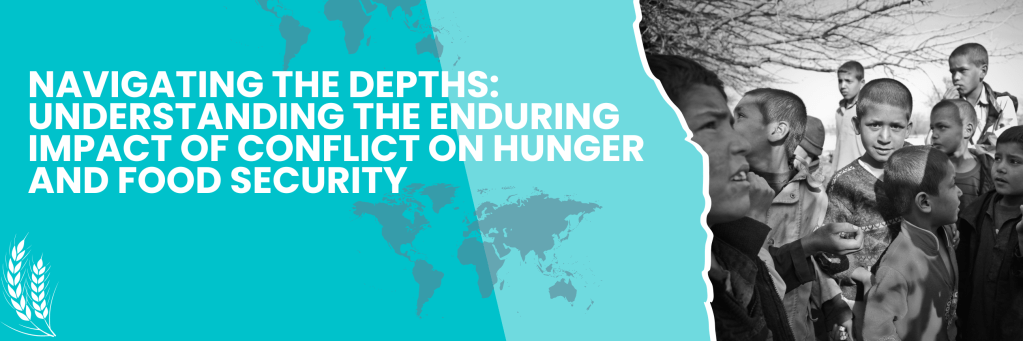
In the intricate tapestry of the 21st century, global conflicts weave a complex narrative that extends far beyond the battlefield. Among the myriad consequences of conflict, few are as pervasive and far-reaching as its profound impact on food security and hunger levels. From the war-torn landscapes of Yemen and Ukraine to the besieged streets of Gaza, the correlation between conflict and food insecurity is stark, leaving a lasting imprint on societies worldwide.
In recent years, conflicts in Yemen, Ukraine, and Gaza have thrust the issue of food security into the spotlight, exposing the dire consequences of violence and instability on access to food. Throughout 2023 and 2024, these regions grappled with acute food shortages and escalating hunger rates as a direct result of ongoing conflict. In Gaza, a country already plagued by poverty and political turmoil, the conflict has precipitated a humanitarian catastrophe of staggering proportions, with millions teetering on the brink of famine. Similarly, in Ukraine, the conflict has disrupted agricultural production and supply chains, exacerbating food insecurity for vulnerable populations. Meanwhile, in Yemen, the relentless cycle of conflict has stifled economic development and access to food, leaving countless families struggling to secure their next meal.
The Vicious Cycle of Conflict-Induced Food Insecurity
The nexus between hunger levels and conflicts is deeply intertwined, with each exacerbating the other in a vicious cycle of deprivation and despair. Conflict disrupts every facet of food security, from production and distribution to access and affordability, sending shockwaves through already fragile systems. Displacement, destruction of infrastructure, and economic instability further compound the challenges, leaving communities reeling from the cascading effects of conflict-induced food insecurity.
Recovering from the ravages of conflict on food security is a monumental task that demands sustained commitment and collaboration. Studies have shown that the road to recovery can be long and arduous, with some countries taking years, if not decades, to return to pre-conflict levels of food security. Rebuilding shattered agricultural systems, restoring livelihoods, and addressing the underlying drivers of conflict are critical components of any comprehensive strategy to achieve lasting food security in conflict-affected regions.
Strategies for Long-Term Food Security
However, there exist methods and approaches for expediting the eradication of food insecurity in the aftermath of conflict. Immediate interventions, such as emergency food assistance and nutritional support, play a crucial role in meeting the urgent needs of affected populations and preventing further deterioration. Investing in the resilience of smallholder farmers, rehabilitating agricultural infrastructure, and promoting sustainable land management practices are equally essential for laying the groundwork for long-term food security. Moreover, fostering peace, promoting social cohesion, and addressing the root causes of conflict, including poverty, inequality, and political instability, are fundamental prerequisites for breaking the cycle of conflict-induced food insecurity.
In conclusion, the enduring impact of conflict on hunger and food security underscores the urgent need for concerted action and unwavering commitment. As we navigate the depths of a turbulent world, it is incumbent upon us to recognize the interconnectedness of peace, stability, and food security. By addressing the root causes of conflict and investing in sustainable solutions, we can chart a course toward a more equitable, resilient, and food-secure future for all.

 Do More. Technology Re-imagined.
Leave a comment