
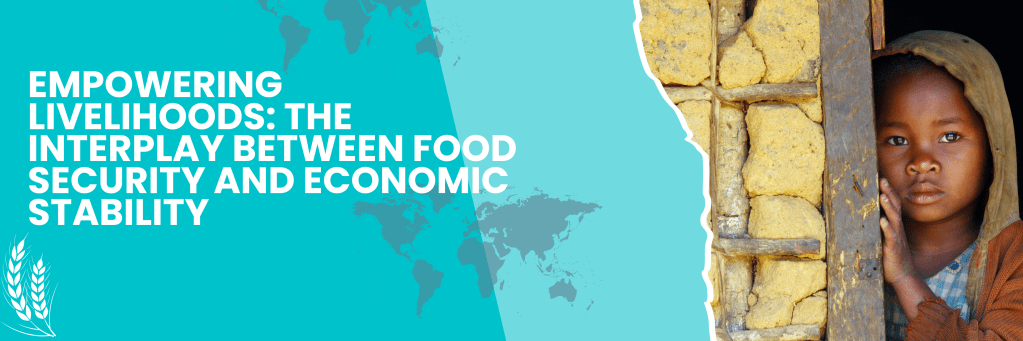
The relationship between food security and livelihoods is essential for building resilient communities. In today’s world, it’s crucial to recognize that food security is more than just supplying food; it involves fostering sustainable livelihoods that enable individuals and communities to thrive. Let’s explore how innovative approaches and technology can improve food security and livelihoods for a more sustainable future.
The Connection Between Food Security and Livelihoods
Consider a world where everyone not only has enough food but also stable income sources, allowing them to live with dignity. This scenario underscores the strong link between food security and livelihoods. Having access to nutritious food and reliable income helps people manage economic shocks, invest in their futures, and contribute positively to their communities.
Conversely, food insecurity can trap families in poverty, restricting their ability to earn a stable income and perpetuating economic instability. Addressing this requires an integrated approach that includes agricultural development, economic empowerment, and technological innovation.
Innovations Driving Positive Change
- Agri-Tech Solutions: Revolutionizing Farming Practices
Technological advancements in agriculture, known as agri-tech, are transforming farming by increasing productivity and sustainability. Precision agriculture, for example, employs data analytics, IoT devices, and drones to monitor crop health, optimise water usage, and reduce costs. These tools enable farmers to make informed decisions, increasing yields and income stability.
Example: In Kenya, mobile platforms such as KAOP and Digifarm that offer real-time weather forecasts and market prices have helped smallholder farmers make smarter planting and selling decisions, boosting their incomes by up to 30%. - Microfinance and Financial Inclusion: Empowering Smallholder Farmers
Access to financial services like microloans and insurance is crucial for smallholder farmers. Microfinance institutions provide the necessary capital for seeds, equipment, and new technologies, while insurance offers protection against crop loss due to bad weather.
Example: In Bangladesh, microfinance initiatives such as BRAC and Grameen Bank have made affordable loans accessible to over 5 million rural households, significantly enhancing agricultural productivity and food security. - Sustainable Farming Techniques: Promoting Long-Term Resilience
Sustainable farming practices, such as agroforestry, conservation agriculture, and organic farming, help maintain soil health, increase biodiversity, and minimise environmental impact. These methods improve crop yields and diversify farmers’ income sources. Elevating indigenous practices through the incorporation of scientific methodology and agtech has enabled significant strides to be made in the field of agroforestry.
Example: In Ethiopia, the adoption of agroforestry has reduced poverty, enhanced food security, improved resilience to climate change and conserved biodiversity. In this context, the Centre for International Forestry Research and World Agroforestry (CIFOR-ICRAF), in collaboration with the Global Center on Biodiversity for Climate (GCBC), is seeking to catalyse the further adoption of agroforestry through a new research-in-development project, Multifunctional Agroforestry for Enhanced Biodiversity, Improved Livelihood, and Resilient Landscapes in Ethiopian Highlands.
The Imperative of Innovation
As we confront the challenges of climate change, population growth, and economic inequality, the need for innovative solutions to enhance food security and livelihoods has never been more urgent. By harnessing the power of technology and fostering inclusive economic opportunities, we can create a more resilient and equitable world.
- Digital Platforms and Market Access
Digital platforms that link farmers to markets and supply chains are crucial for securing fair prices and reducing post-harvest losses. By providing real-time market data and direct buyer connections, these platforms improve farmers’ bargaining power and promote fair trade. - Climate-Resilient Crops and Practices
Research and development into climate-resilient crops and farming methods are essential for mitigating the impacts of climate change. Innovations like drought-resistant seeds and improved irrigation techniques help sustain agricultural productivity under environmental stress. - Education and Skill Development
Educational programs and extension services are vital for equipping farmers with the knowledge and skills needed for modern agricultural practices. Education enables farmers to effectively use new technologies and adapt to evolving agricultural conditions.
Building a Sustainable Future
Achieving sustainable food security and resilient livelihoods requires cooperation from governments, the private sector, non-profits, and communities. By promoting agricultural innovations and economic empowerment, we can eliminate the cycle of poverty and hunger, ensuring a future where everyone has the opportunity to thrive.
By integrating technology and sustainable practices, we can realise a future where food security and robust livelihoods coexist, fostering hope and prosperity for all. Let’s commit to this transformative journey, working together to make it a reality.

 Do More. Technology Re-imagined.
Leave a comment