
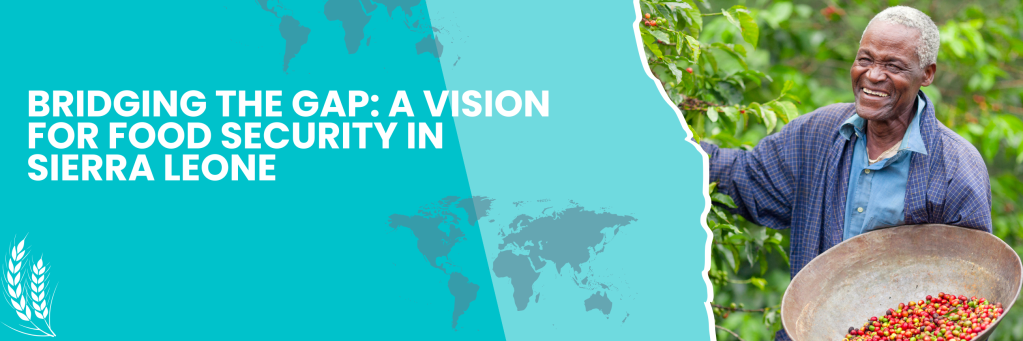
In Sierra Leone, a nation blessed with fertile lands and abundant water resources, the paradox of food insecurity looms large. Despite its agricultural potential, the country imports 80% of its food. This stark reality highlights the systemic challenges facing smallholder farmers, from limited access to technology and resources to socio-economic barriers that stifle progress. Yet, amidst these challenges, change-makers like Emmanuel Lavalie are creating solutions that empower communities and foster hope for a food-secure future.
Challenges Rooted in History and Policy
Sierra Leone’s struggle with food security is deeply rooted in its history. Years of conflict have disrupted agricultural systems, leading to a dependence on imported food. Even as peace returns, smallholder farmers—the backbone of the country’s agriculture—face hurdles such as:
- Lack of Access to Credit and Technology: Most farmers lack the funds to invest in high-yield seeds, fertilizers, or advanced farming tools, leaving them reliant on outdated methods.
- Climate Change: Unpredictable weather patterns threaten crop yields, exacerbating food insecurity.
- Perception of Farming: In communities impacted by mining, farming is often seen as a high-risk, low-reward endeavor. This perception discourages investment and participation in agriculture.
- Gender Inequality: Women, who make up a significant portion of the agricultural workforce, often have limited access to land ownership and resources.
Locally Driven Solutions and Innovative Projects
Recognizing these challenges, Emmanuel Lavalie, founder of The Impere Foundation for Education and Agriculture, has spearheaded initiatives that blend traditional knowledge with modern practices to transform Sierra Leone’s agricultural landscape.
- Climate-Smart Agriculture Training
Through targeted training programs, The Impere Foundation introduces farmers to climate-smart practices. These include techniques for conserving water, improving soil fertility, and diversifying crops to mitigate the risks of erratic weather. The foundation has supported 149 farmers, including 30% women, by providing them with maize and vegetable seeds to boost productivity and income. - Youth Empowerment Through Agriculture
Emmanuel believes the youth are key to revitalizing agriculture in Sierra Leone. His programs equip young people with entrepreneurial skills and technical expertise, enabling them to become job creators rather than job seekers. By demonstrating that farming can be profitable and impactful, he is shifting mindsets and inspiring a new generation to see agriculture as a viable career path. - Locally Developed Technologies
Innovative solutions such as mobile irrigation systems and low-cost greenhouses are making a difference in smallholder farming. These technologies, while modest compared to global standards, are tailored to the local context, providing cost-effective ways to improve yields and reduce post-harvest losses. - Community-Led Initiatives
Emmanuel’s philosophy centers on collaboration. By fostering partnerships with local cooperatives and international organizations, he helps smallholder farmers access resources and markets. These collaborations ensure that farmers not only produce food but also gain fair value for their produce.
A Call for Equity and Global Collaboration
While local solutions are crucial, Emmanuel emphasizes the need for global equity in resources and technology. He advocates for better access to funding and tools for African innovators and farmers. “We need equity in the distribution of funds and technology,” he asserts, highlighting the systemic disparities that hinder progress.
Changing Perceptions to Drive Change
One of Emmanuel’s most impactful contributions is his effort to change perceptions about agriculture. In communities dominated by mining, he shows that farming is not just a fallback but a sustainable and lucrative industry. His leadership by example—funding initial farming projects himself—demonstrates the transformative potential of agriculture when given the right support.
The Path Forward
To achieve lasting food security, Emmanuel believes in starting at the grassroots level: “Food security begins with collaboration—love and kindness can break barriers.” His work highlights the importance of empowering individuals while calling for systemic changes to bridge the gap between potential and reality.
Through the innovative use of technology, community-driven programs, and a commitment to equity, Emmanuel Lavalie and The Impere Foundation are proving that sustainable solutions to hunger are within reach. His vision serves as an inspiring blueprint for tackling food insecurity in Sierra Leone and beyond.
Together, with the right blend of local action and global support, we can transform challenges into opportunities, ensuring that no one goes to bed hungry.

 Do More. Technology Re-imagined.
Leave a comment