
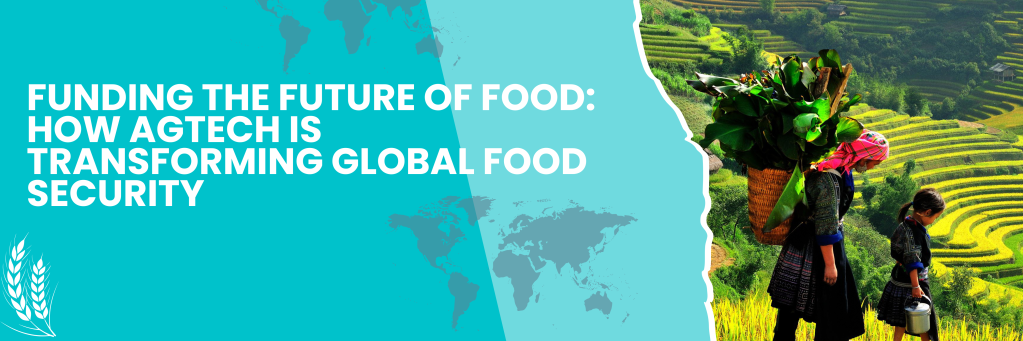
The global food system is facing unprecedented challenges. Climate change, population growth, and resource scarcity are placing immense pressure on agriculture, making innovation not just an advantage but a necessity. While advancements in technology offer a promising future for food production, the real challenge lies in ensuring these solutions are accessible, especially to the farmers and regions that need them most.
Claire Pribula, Managing Director of The Yield Lab Asia-Pacific, is among those driving this transformation. In a recent episode of the Social AgTech Podcast, she shared insights into how venture capital is shaping the future of agritech and why early-stage investment is essential for building a more resilient, food-secure world.
Investing in Innovation: A Catalyst for Change
Agriculture has long been an industry of necessity, yet it remains plagued by inefficiencies. Farmers face unpredictable weather, resource depletion, and supply chain vulnerabilities. Technological advancements—from precision farming to AI-driven analytics—are revolutionizing the industry, but without investment, these innovations struggle to reach the farmers who need them most.
Claire emphasizes that investment is not just about capital. “Startups need the right guidance to navigate commercialization challenges and scale their impact,” she explains. This is where The Yield Lab Asia-Pacific steps in, not only providing financial backing but also leveraging a global network of experts to help agritech startups transform their ideas into viable, scalable solutions.
With over 96 companies supported worldwide, the fund is driving solutions in crop science, precision agriculture, animal health, and sustainable food production. Their work ensures that groundbreaking technologies don’t just remain concepts but actively improve farming practices, making agriculture more efficient and sustainable.
Empowering Smallholder Farmers: The Key to Global Food Security
Despite being responsible for a significant portion of the world’s food supply, smallholder farmers often lack access to the very innovations that could improve their livelihoods. In Southeast Asia alone, smallholders produce 60% of the region’s food, yet many struggle with outdated techniques and limited market access.
Startups like Jala, an Indonesia-based agritech company, are changing this landscape. Jala has developed real-time water quality monitoring and AI-powered analytics for shrimp farmers, providing them with actionable insights to improve yields and reduce environmental impact. By making high-tech solutions accessible, startups like Jala help small-scale farmers compete in global markets without massive investments in infrastructure.
Collaboration is another key to success. Farmer cooperatives that pool resources and expertise can enhance access to technology while improving bargaining power in the marketplace. Ensuring smallholders benefit from agritech advancements is not just an economic issue but a necessary step in addressing global food security.
Maximizing Resources: The Sustainability Imperative
A fundamental challenge in agriculture is producing more food while using fewer resources. Agritech startups are tackling this challenge by optimizing inputs like water, fertilizer, and pesticides through data-driven solutions.
Take Fossil, an India-based startup developing IoT-powered precision farming tools. By helping farmers monitor soil moisture, temperature, and nutrient levels, Fossil has enabled significant improvements in water conservation and crop productivity. Farmers using Fossil’s system report a 20% increase in yield while reducing irrigation costs by 25%. Since its inception, the company has helped save over 85 billion liters of water.
Another example is EarthSense, a company leveraging AI-driven robotics to enable targeted fertilization and disease prevention in palm oil plantations. EarthSense’s autonomous vehicles navigate rough terrain, applying treatments only where needed, drastically reducing chemical use while improving crop health and productivity.
Meanwhile, Biotic is addressing plastic waste in agriculture by developing biodegradable packaging made from seaweed. This innovation not only reduces environmental pollution but also provides a sustainable alternative for farmers needing effective storage solutions.
By investing in solutions like these, the agritech industry is proving that sustainability and profitability are not mutually exclusive. Smarter resource management benefits both the environment and farmers’ bottom lines.
The Power of Data: Transforming Food Distribution
Beyond improving farm productivity, data analytics is revolutionizing food distribution and reducing waste. Despite producing enough food to feed the world, inefficiencies in the supply chain result in millions of tons of wasted produce every year.
Startups like Tamara are tackling this issue with blockchain-based supply chain traceability. By providing real-time visibility into food logistics, Tamara helps prevent fraud, ensure fair trade practices, and improve efficiency, ensuring food reaches consumers rather than being lost along the way.
Similarly, iAquaculture is using AI to optimize fish farming operations. By analyzing water conditions, feeding patterns, and fish health, iAquaculture helps farmers reduce waste and improve production efficiency—critical for maintaining a stable food supply in aquaculture-dependent regions.
These advancements demonstrate that technology is not just about improving yields but also ensuring that food reaches those who need it most in a sustainable and efficient manner.
The Future of AgTech: Scaling Innovation for Impact
The agritech revolution is well underway, but the true challenge lies in scaling these innovations to create lasting change. The future of food security depends on continued investment, collaboration, and a commitment to ensuring technology reaches farmers of all sizes, particularly those in food-insecure regions.
“Investing in early-stage agritech startups isn’t just about financial returns—it’s about creating real, lasting impact. The right innovations can change the game for food security,” Claire emphasizes.
Companies like Fossil, EarthSense, Jala, Biotic, and Tamara are already demonstrating that smart solutions can drive both sustainability and profitability. However, to maximize their impact, they need support from investors, policymakers, and industry leaders willing to champion transformative change.
The time to act is now. Whether through investment, partnership, or advocacy, we all have a role to play in shaping the future of food security. By embracing agritech innovation, we can build a world where food is abundant, sustainable, and accessible for all.
Disclaimer
This blog is for informational purposes only and does not constitute financial or investment advice. dmtr does not provide guidance on specific investment decisions or guarantee outcomes based on the information presented.

 Do More. Technology Re-imagined.
Leave a comment