
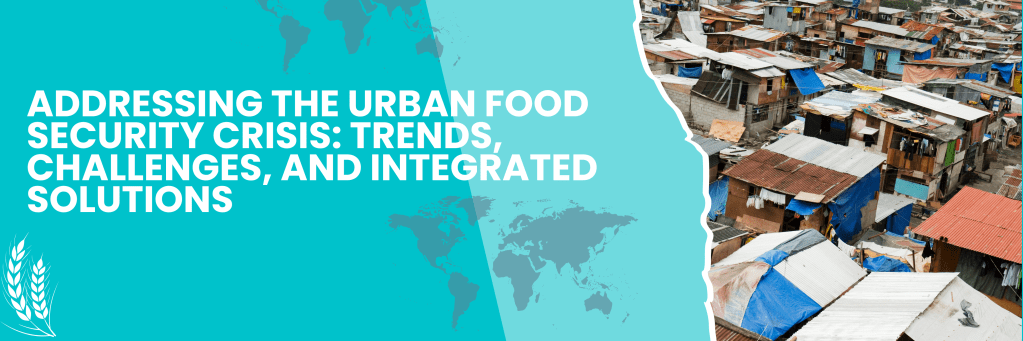
Cities at the Heart of the Hunger Challenge
Across the globe, cities are expanding at unprecedented rates. With this growth comes immense pressure on food systems, infrastructure, and governance. While urban areas are engines of innovation, they are also home to food deserts, malnutrition, and overwhelming food waste. Ensuring equitable access to safe, nutritious, and affordable food for urban residents has become one of the most pressing challenges of our time.
For decades, however, hunger has been seen primarily as a rural problem. Policy, research, and aid programmes have long focused on rural farmers, overlooking the growing challenge of food insecurity in cities. This rural bias has left a blind spot: millions of urban dwellers struggling to put food on the table in rapidly changing, increasingly unequal urban environments.
Food Insecurity in Cities: The Latest Picture
Although food insecurity remains higher in rural communities, urban areas are far from immune. In 2024, nearly one in four people living in cities—23.9 percent—experienced moderate or severe food insecurity. Around 8.1 percent faced severe hunger. Encouragingly, urban areas showed slight improvement compared with 2022, with global food insecurity dropping from 25.7 to 23.9 percent. Yet regional differences remain stark. Asia saw notable progress, with urban food insecurity falling from 21.9 to 19.2 percent over two years, while in Africa the situation worsened in both urban and rural areas.
Despite these modest signs of recovery, global hunger levels remain far higher than in 2015, when the world first committed to ending hunger by 2030. And while rural hunger still affects more people overall, the scale and persistence of urban food insecurity underline the need to break away from the assumption that hunger is a rural issue alone.
Why Are Cities Struggling?
Urban food systems face overlapping challenges that make them fragile and unequal. Rapid urbanisation often outpaces cities’ ability to provide healthy and affordable food for all, creating food deserts that hit vulnerable populations hardest. Heavy dependence on markets makes low-income households extremely sensitive to price shocks, with even a 10 percent rise in food prices linked to a 3.5 percent increase in food insecurity. At the same time, complex supply chains create massive food loss and waste, overwhelming municipal systems and wasting precious resources.
Adding to these difficulties is the historic lack of attention given to urban hunger. Because food insecurity has been framed largely as a rural issue, city governments often lack targeted resources, data, and strategies to address urban food access. Local initiatives exist but are often fragmented and poorly connected to national strategies, resulting in a patchwork of responses that fail to meet the scale of the problem.
Pathways Toward Urban Food Security
Tackling hunger in cities requires an integrated approach that combines data, innovation, and long-term planning. Establishing robust assessments of urban food availability is a vital first step, giving decision-makers reliable evidence for action. Digital platforms like the NaturEaTown (NET) system can help map food sources, track surplus, and link producers with distributors, ensuring that food reaches those who need it most.
Nature-based solutions also hold promise. Planting urban food trees and creating edible landscapes can strengthen local supply chains while providing co-benefits such as cooler temperatures, cleaner air, and stronger community ties. To succeed, these initiatives need clear guidance, governance support, and incentives for both community groups and private actors to participate.
Policies must also focus on resilience. This means protecting vulnerable households during price spikes through nutrition-sensitive safety nets, investing in cold storage and transport infrastructure, and supporting research to reduce post-harvest losses. Shorter, more transparent supply chains and market information systems can further stabilise food prices and build trust in urban food markets.
A Way Forward
The challenge of feeding growing cities cannot be solved by reactive measures alone. Instead, it demands coordinated, data-driven, and forward-looking strategies that integrate technology, nature-based solutions, and strong governance. Crucially, it also requires moving beyond the rural bias that has long shaped food security policy. Hunger is not only a rural issue; it is increasingly urban, shaped by rapid urbanisation, inequality, and fragile food systems.
If these realities are recognised and addressed, cities can transform from hotspots of vulnerability into hubs of sustainable food security. Doing so will not only strengthen resilience for millions of urban dwellers but also bring the world closer to achieving the goal of Zero Hunger. The choices made today will determine whether urban food systems collapse under pressure—or evolve into models of resilience and equity for the future.

 Do More. Technology Re-imagined.
Leave a comment